
Putting Teacher Wellbeing First: Your Space for Insight, Support, and Renewal
A curated collection of reflections, strategies, and resources to help educators regulate, reset, and feel genuinely supported.

Feeling Exhausted as the Term Ends? Emotional Labour Might Be Why
Being “on” for students, colleagues, and families’ places a constant demand on your nervous system, slowly draining your energy in ways that often go unseen. In this blog, we explore why emotional labour takes such a toll, how to intentionally recharge your different energy systems over the holidays, and the simple rhythms you can build into Term 2 to support your nervous system, notice early signals of overload, and regulate throughout the day with more ease and compassion.

Why the First Weeks Feel So Heavy — And Why It’s Not Your Fault
In the first weeks of school, so many teachers are already being incredibly hard on themselves. You’re expected to build relationships, set routines, learn a brand‑new class, deliver curriculum, and hold it all together with calm confidence — an impossible load to carry this early on.
And with national data showing rising developmental vulnerability and increasing classroom complexity, it’s no wonder the start of the year feels overwhelming.
This is exactly why teachers need self‑compassion now more than ever. It’s not indulgent — it’s protective. It helps you stay grounded, kinder to yourself, and better able to meet the real needs of the students in front of you.
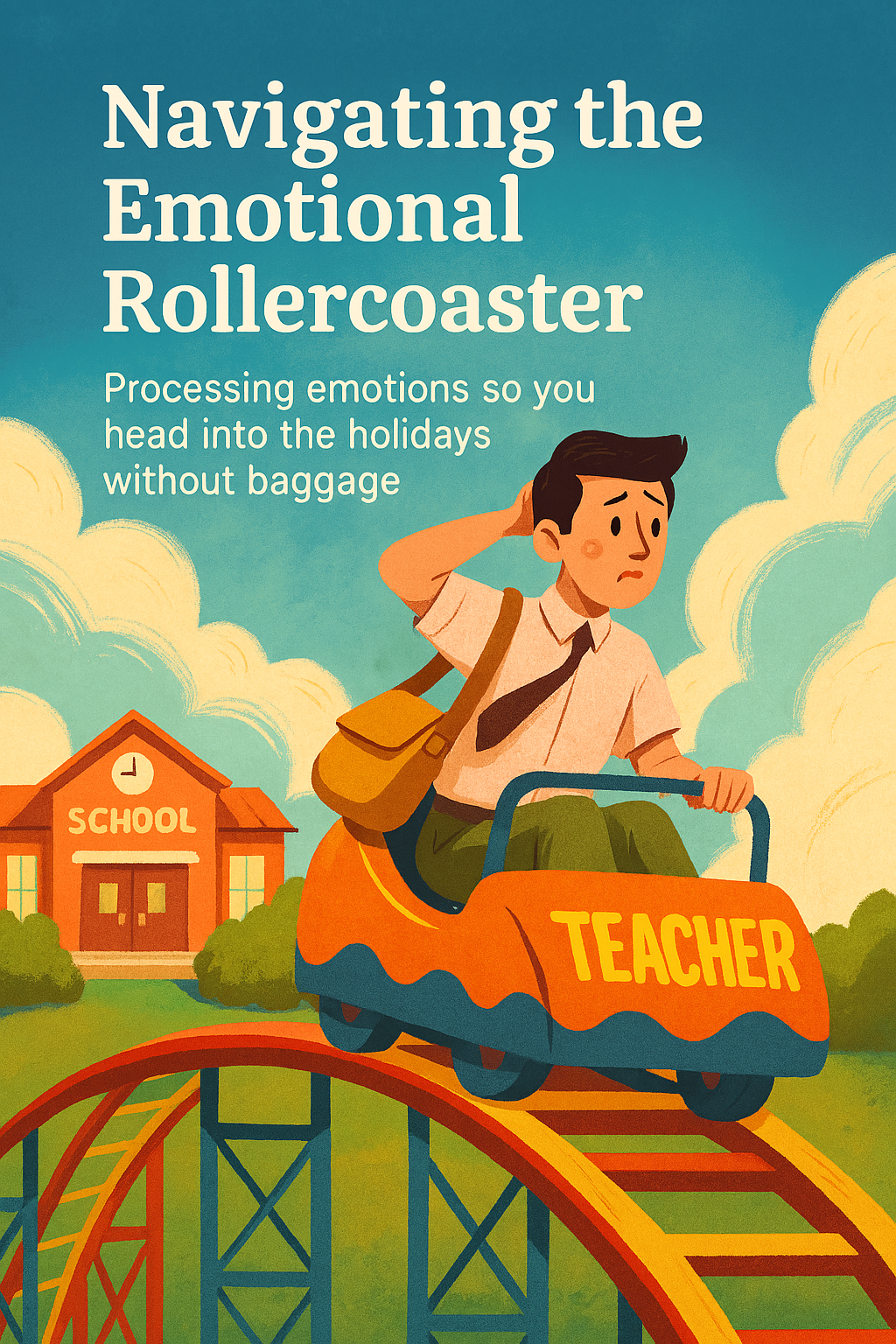
Navigating the Emotional Rollercoaster at the End of the School Year
As the school year draws to a close, teachers often find themselves riding an emotional rollercoaster—one moment celebrating student growth, the next feeling the weight of exhaustion or unexpected grief. These emotions aren’t signs of weakness; they’re signals from the nervous system, asking to be acknowledged. When we pause to name what we’re feeling—whether it’s joy, overwhelm, sadness, or relief—we begin to regulate rather than react. Processing these emotions now means we don’t carry them into the holidays like hidden baggage. Instead, we create space for rest, renewal, and clarity.

How to Truly Relax: Reclaiming Calm Through the Parasympathetic Nervous System
In a world that rarely slows down—especially for educators—true relaxation isn’t just a luxury, it’s a biological necessity. This blog explores how the parasympathetic nervous system helps us restore, repair, and reconnect, and why mental activation (even during “downtime”) can block our body’s ability to relax. Drawing on insights from Teacher Wellbeing Transformed, it offers practical, evidence-based techniques to stimulate the vagus nerve and activate your relaxation response. If you’re ready to move from survival to restoration, this is your invitation to begin.

Teacher Regulation Isn’t Selfish—It’s Transformational
What if the most powerful classroom strategy isn’t a new program or behaviour plan—but a regulated teacher?
In this post, we explore how teacher regulation transforms not only personal wellbeing but also student engagement, classroom culture, and school-wide sustainability. Drawing on insights from Dr. Bruce Perry and Dr. Lori Desautels, we unpack the neuroscience behind co-regulation and the ripple effects of emotionally attuned educators.
If you’ve ever felt guilty for prioritising your own wellbeing, this is your invitation to reframe. Regulation isn’t selfish—it’s essential.
Read the full post and discover why regulated teachers are the heartbeat of thriving schools.

Teachers don’t need self-care – they need self-preservation!
Self-care is no longer enough. In a profession marked by chronic stress and rising burnout, educators need more than surface-level solutions. The latest blog explores why self-preservation—grounded in nervous system regulation and emotional literacy—is essential for sustaining wellbeing. It’s not just about feeling better; it’s about staying well enough to keep showing up.