
Navigating the Emotional Rollercoaster at the End of the School Year
A Season of Shifting Emotions
The end of the year is a whirlwind of feelings that seem to change by the hour:
Overwhelm at the sheer number of end‑of‑year activities, reports, concerts, graduations, and celebrations.
Anxiety about what lies ahead—new classes, new students, new challenges, and the unknowns of the following year.
Excitement as achievements are celebrated with students, marking the growth and progress of the year.
Joy in sharing fun‑filled moments with colleagues and students, from parties to assemblies to final lessons.
Sadness as teachers say goodbye to students they’ve nurtured, knowing the classroom community will never be quite the same again.
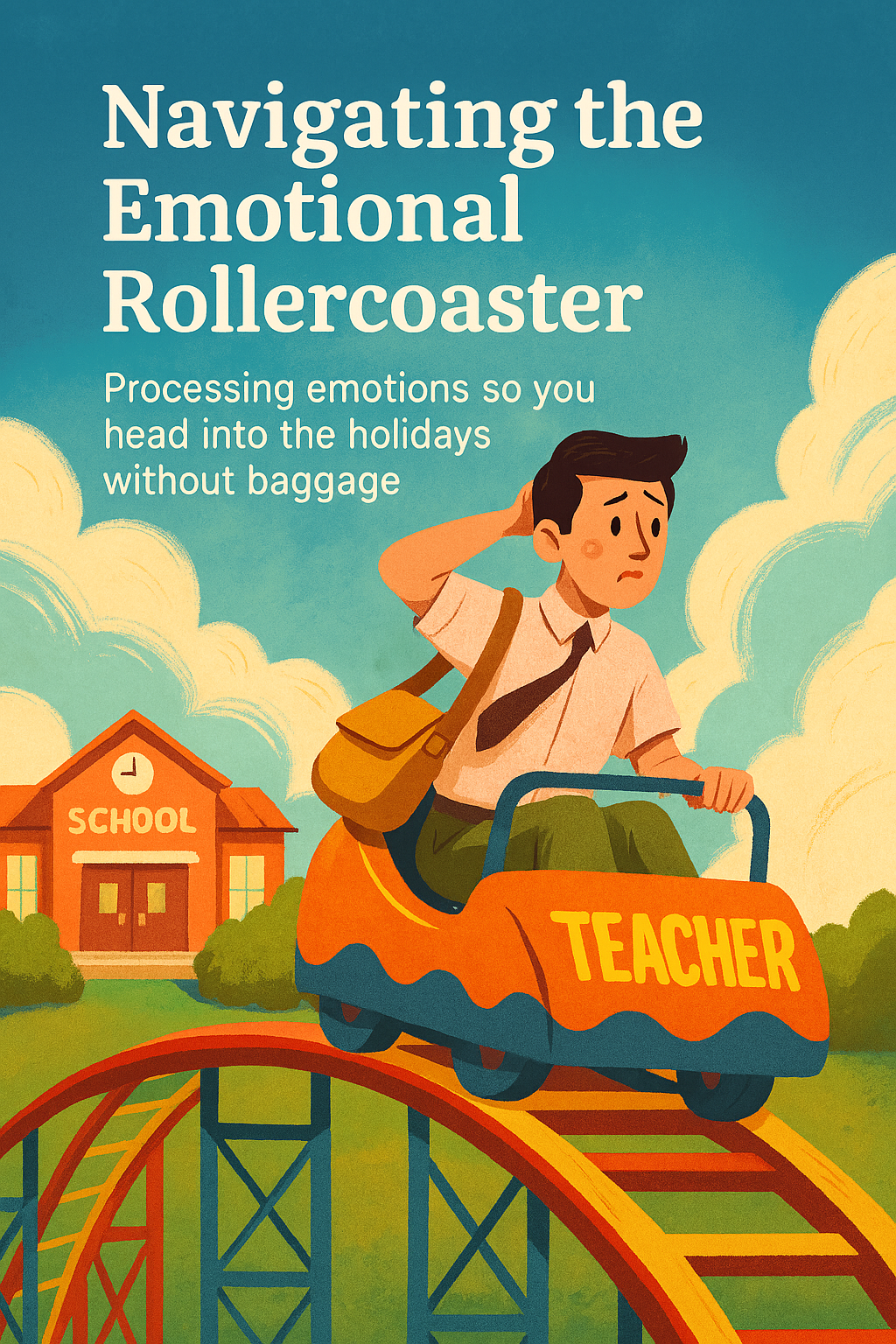
This constant shifting between emotions can feel like riding a rollercoaster—uplifting one moment, draining the next.
Navigating the Ride
For educators, managing this rollercoaster means:
Allowing space for both joy and grief.
Recognising that overwhelm and anxiety are natural responses to transition.
Celebrating achievements while honouring the sadness of goodbyes.
Prioritising rest, regulation, and practices like journaling to enter the holidays with renewal rather than collapse.
Emotions as Signals
Despite the ups and downs, the best thing we can do is name the emotion. Self‑awareness is one of the most powerful strategies we have for understanding and processing emotions. When we pause to notice what we’re feeling—naming emotions like overwhelm, joy, or sadness—we begin to create space between the experience and our response. As Bessel van der Kolk explains, “simply noticing what you feel fosters emotional regulation, and it helps you to stop trying to ignore what is going on inside you.” This act of recognition allows us to move from being swept away by emotions to consciously working with them.
Processing emotions before the holidays
In a previous blog ‘5 self-awareness strategies for teachers’, I highlighted the power of daily reflection through journaling. Journaling is one of the most accessible ways to process emotions—it helps clarify your inner world, track patterns, and build self‑awareness. Try journaling this week. Write down one emotion you felt each day and what triggered it. You’ll be amazed at how quickly self‑awareness grows when you give your inner world a voice. Acknowledging and working through these emotions now means you enter the holidays free from their weight
End of Year Reflection
The end of the school year is a paradox—exhausting yet rewarding, joyful yet sad. It’s a season that asks much of teachers but also offers profound meaning.
As we close another year, let’s honour the full spectrum of emotions. Let’s acknowledge the overwhelm, embrace the joy, and allow the sadness to remind us of the depth of our work. Because in the end, this rollercoaster is proof of the extraordinary impact teachers have—not just on learning, but on lives.
Give yourself the gift of renewal
As the year closes, give yourself the gift of renewal. Teacher Wellbeing Transformed offers holiday reading that supports emotional awareness and stress management, helping you step into the new year with clarity and calm.