
Why Teachers Dream of Chaos — And How to Find Calm Again

Last night I had one of those unsettling dreams — the kind that stays with you long after you wake up.
I was back in the classroom, about to hand out papers for the NAPLAN writing test (clearly my subconscious hasn’t caught up to the digital era). But I couldn’t find the stimulus page. I couldn’t find any paper for students to write on. The test was meant to start in five minutes, and I was running around the room in a frantic blur.
I felt unprepared. Chaotic. Maddened.
My mind was spiralling with unhelpful thoughts:
What’s going to happen?
I look completely unprofessional.
Why aren’t I organised? I swear I had everything ready.
Where is it? What is wrong with me?
Even in the dream, I could feel my heart pounding and that nauseous swirl in my stomach — the unmistakable signature of anxiety.
Can you relate?
I used to have dreams like this at the beginning of each term, and especially at the start of the school year. And honestly, it makes perfect sense.
Teaching is an uncertain profession.
The variability of students, parents, colleagues, timetables, leadership decisions, curriculum changes — even the physical classroom — shifts more frequently than in most other jobs. There is so much you cannot predict, control, or prepare for.
So if you’ve ever felt overwhelmed, unsettled, or had dreams like mine, there is nothing wrong with you. You don’t need to diagnose yourself with anxiety. You don’t need to assume you’re not capable enough.
Your nervous system is simply doing its best to protect you.
What’s really happening inside your body
When your brain detects uncertainty, embarrassment, shame, self‑doubt, or overwhelm, it interprets these as potential threats. And your nervous system reacts instantly:
racing heartbeat
nausea
sweating
foggy thinking
difficulty making decisions
This happens because your amygdala — the part of your brain responsible for threat detection — fires up, while your prefrontal cortex (the calm, rational part) goes offline.
It’s not a character flaw. It’s biology.
The moment my dream shifted
Interestingly, in the middle of the ‘dream chaos’, something new happened.
I heard myself say, “Calm down. You won’t find the papers if you’re stressed. Breathe. Slow down. You’ll remember.”
My understanding of nervous system regulation had slipped into the dream. I knew — even half asleep — that I needed to regulate before I could think clearly.
This was never how my dreams used to go. And it certainly wasn’t how my stressful moments used to unfold in real life.
It’s only through learning about the nervous system that I’ve come to recognise the signs, pause, and support myself back into regulation.
Teaching will always be uncertain — but you don’t have to feel powerless
Yes, teaching can be anxiety‑provoking and stressful. But it doesn’t have to feel that way all the time.
With knowledge and awareness of your nervous system, you can:
understand what’s happening inside you
reduce self‑blame
calm your body
think more clearly
make grounded decisions
model regulation for your students
This is the heart of sustainable wellbeing.
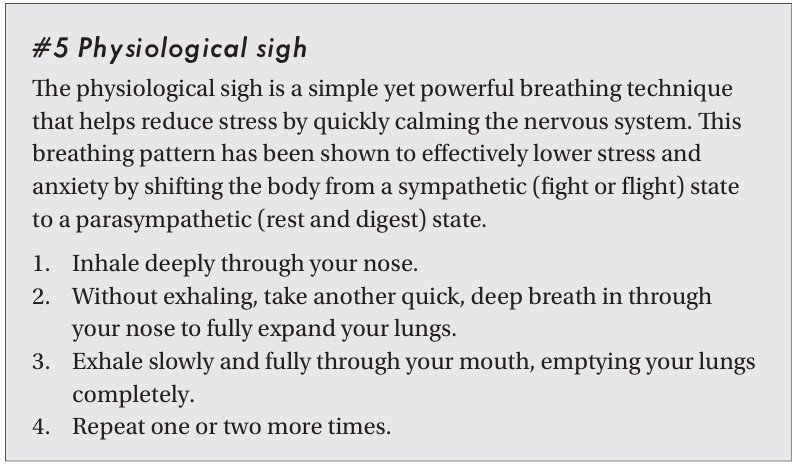
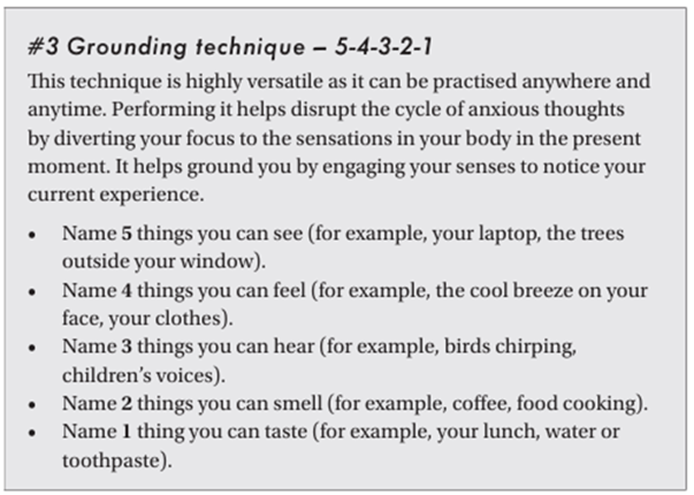
A few of my favourite strategies for moments of overwhelm
These are just two gentle suggestions, but they’re quick, accessible ways to bring your nervous system back into balance when overwhelm hits.
If this resonated with you… there’s so much more waiting for you
If you found yourself nodding along, recognising your own dreams, your own racing heartbeat, your own moments of uncertainty — please know this is just the beginning of what’s possible.
Everything I’ve shared here is explored in far more depth in my book, Teacher Wellbeing Transformed. It’s a gentle, practical guide to understanding your nervous system, reducing overwhelm, and reclaiming your sense of calm and clarity in the classroom.
And if you’re craving something more interactive and supportive, I’m so excited to share that my new online course is coming soon. It’s designed to walk you step‑by‑step through the tools, insights, and regulation strategies that help teachers move from survival mode to sustainable wellbeing.
If you’re ready to go deeper, learn more, and build a toolkit that truly supports you — I’d love to walk alongside you.
Stay tuned. Your wellbeing journey is just beginning.